
Pass ACFE Exams on first attempt with the help of our proxy services or our guaranteed exam questions and answers, We can pass the exam on your behalf, if you are not sure of passing the exam on your own, when working with us, there's no chance for failure. Contact Us Today, certified fraud examiner in Denmark.
Certified Fraud Examiner (CFE): Complete Guide to the Profession, Certification, Salary & Career Opportunities in 2026
Last Updated: November 2026
Fraud is a growing concern for businesses, financial institutions, government agencies, and organizations worldwide. From financial statement manipulation and asset misappropriation to corruption and cyber-enabled financial crime, organizations need skilled professionals who can identify, investigate, and prevent fraudulent activities.
This is where a Certified Fraud Examiner (CFE) plays an important role.
The Certified Fraud Examiner credential, awarded by the Association of Certified Fraud Examiners (ACFE), is a globally recognized professional qualification for individuals specializing in fraud prevention, detection, investigation, and deterrence.
Whether you are an accountant, auditor, finance professional, compliance officer, investigator, or someone interested in entering the anti-fraud profession, becoming a Certified Fraud Examiner can help you develop specialized knowledge and professional credibility.
In this comprehensive guide, we explore what a Certified Fraud Examiner does, the qualifications required, certification costs, examination structure, career opportunities, and the potential benefits of earning the CFE credential.
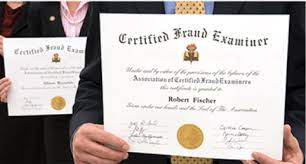
1. What Is a Certified Fraud Examiner?
A Certified Fraud Examiner (CFE) is a professional who has demonstrated specialized knowledge in identifying, preventing, investigating, and deterring fraud.
The CFE credential is awarded by the Association of Certified Fraud Examiners, an international professional organization dedicated to reducing fraud and financial misconduct.
Certified Fraud Examiners use their expertise to help organizations:
- Detect fraudulent financial transactions.
- Investigate suspected financial misconduct.
- Identify weaknesses in internal controls.
- Prevent occupational fraud.
- Investigate corruption and financial crimes.
- Strengthen corporate governance.
- Develop effective fraud prevention programs.
CFEs work in various industries, including banking, insurance, accounting, consulting, government, manufacturing, and corporate security.
The credential demonstrates professional knowledge of fraud examination, investigative techniques, financial transactions, legal issues, and fraud prevention.
2. What Does a Certified Fraud Examiner Do?
A Certified Fraud Examiner performs several important functions depending on their industry, employer, and area of specialization.
Their primary objective is to protect organizations from financial losses, misconduct, and fraudulent activities.
Here are some of their most common responsibilities.
A. Fraud Investigation, certified fraud examiner in Denmark.
Fraud investigation is one of the most important responsibilities of a CFE.
Professionals investigate suspected fraudulent activities by:
- Reviewing financial records.
- Examining suspicious transactions.
- Interviewing employees and relevant parties.
- Collecting and documenting evidence.
- Identifying individuals involved in fraudulent activities.
- Preparing investigation reports.
For example, a company may discover unusual payments to an unknown supplier. A Certified Fraud Examiner may investigate the transactions, review supporting documentation, and determine whether the payments involve a fraudulent scheme.
B. Fraud Detection
CFEs help organizations identify potential fraud before it creates significant financial damage.
Fraud detection activities may include:
- Reviewing accounting records.
- Identifying unusual transaction patterns.
- Conducting financial data analysis.
- Examining expense claims.
- Reviewing procurement activities.
- Monitoring suspicious employee behavior.
Modern fraud detection increasingly involves data analytics, automation, and technology-assisted monitoring.
C. Fraud Prevention
Preventing fraud is just as important as investigating it.
Certified Fraud Examiners help organizations design and implement preventive measures, including:
- Internal control systems.
- Fraud risk assessments.
- Anti-fraud policies.
- Employee awareness programs.
- Whistle blower reporting procedures.
- Ethical business practices.
An effective fraud prevention program reduces opportunities for fraudulent activities and strengthens organizational accountability.
D. Financial Analysis
Financial analysis helps fraud examiners identify irregularities that may indicate fraud.
Examples include:
- Unusual journal entries.
- Duplicate payments.
- Suspicious vendor transactions.
- Unexplained financial adjustments.
- Revenue manipulation.
- Unusual inventory movements.
E. Investigation Reporting
After completing an investigation, a CFE may prepare a detailed report outlining:
- The allegations investigated.
- Procedures performed.
- Evidence collected.
- Financial impact.
- Investigation findings.
- Recommendations for improvement.
These reports may be used by management, legal departments, regulators, or other authorized parties.
3. What Types of Fraud Do Certified Fraud Examiners Investigate?
Certified Fraud Examiners deal with different types of occupational and financial fraud.
Some of the most common categories include:
Asset Misappropriation
Asset misappropriation occurs when employees or other individuals misuse or steal an organization's resources.
Examples include:
- Employee theft.
- Inventory theft.
- Payroll fraud.
- Expense reimbursement fraud.
- Cash skimming.
- Unauthorized company purchases.
Financial Statement Fraud
Financial statement fraud involves intentionally manipulating financial information to misrepresent an organization's financial position or performance.
Examples include:
- Overstating revenue.
- Understating expenses.
- Concealing liabilities.
- Manipulating accounting estimates.
- Falsifying financial records.
Corruption
Corruption involves abusing an entrusted position for personal or financial benefit.
Examples include:
- Bribery.
- Conflicts of interest.
- Illegal gratuities.
- Procurement kickbacks.
- Undisclosed financial relationships.
Cyber-Enabled Financial Fraud
Technology has created additional opportunities for financial crime.
Examples include:
- Business email compromise.
- Payment diversion fraud.
- Identity theft.
- Online financial scams.
- Digital payment fraud.
CFEs may work alongside cybersecurity professionals, forensic specialists, and law enforcement agencies when investigating these cases.
4. Certified Fraud Examiner Qualification Requirements
To become a Certified Fraud Examiner, candidates must meet the eligibility and professional requirements established by ACFE.
The certification process includes five main requirements.
1. ACFE Membership
You must become an Associate Member of the Association of Certified Fraud Examiners.
ACFE membership is mandatory for candidates pursuing the CFE credential.
2. Educational and Professional Eligibility Points
ACFE uses a qualifying points system to evaluate candidates' educational qualifications, approved professional credentials, and relevant experience.
The requirements are:
- At least 40 qualifying points to take the CFE examination.
- At least 50 qualifying points to receive the CFE credential.
A bachelor's degree or equivalent from an accredited institution generally provides 40 qualifying points.
However, a bachelor's degree is not strictly mandatory. Other combinations of education, approved professional credentials, and qualifying work experience may satisfy the points requirement.
3. Professional Experience
Candidates must have at least two years of professional experience in a field related to fraud detection or deterrence before receiving the CFE credential.
Relevant experience may include:
- Accounting and auditing.
- Fraud investigation.
- Compliance and ethics.
- Corporate security.
- Loss prevention.
- Fraud risk management.
- Legal services related to fraud.
- Proactive fraud detection.
The majority of the responsibilities in the role must relate to the fraud examination body of knowledge for the experience to qualify.
4. Pass the CFE Examination
Candidates must successfully pass all three sections of the CFE examination.
5. Follow the ACFE Code of Professional Ethics
Candidates must demonstrate good professional character and agree to follow the ACFE bylaws and Code of Professional Ethics.
The application also requires three professional recommendations.
5. Certified Fraud Examiner Examination Structure
The CFE examination evaluates the candidate's understanding of the major areas of fraud examination.
As of June 2, 2026, ACFE uses an updated examination structure consisting of three sections.
Section 1: Fraud Schemes and Financial Crimes
This section evaluates knowledge of different types of fraud and financial misconduct.
Topics include:
- Asset misappropriation.
- Corruption.
- Financial statement fraud.
- Fraudulent transactions.
- Financial crimes.
- Fraud detection.
Section 2: Fraud Investigations and Legal Issues
This section focuses on the methods and legal considerations involved in investigating fraud.
Topics include:
- Investigation planning.
- Evidence collection.
- Interviewing techniques.
- Fraud investigation procedures.
- Legal principles.
- Investigation documentation.
- Reporting findings.
Section 3: Fraud Prevention and Deterrence
This section focuses on the reasons fraud occurs and the methods organizations use to prevent it.
Topics include:
- Fraud risk management.
- Internal controls.
- Fraud prevention programs.
- Corporate governance.
- Organizational ethics.
- Fraud deterrence.
Examination Format
| Examination section | Questions | Time |
|---|---|---|
| Fraud Schemes and Financial Crimes | 120 | 2.5 hours |
| Fraud Investigations and Legal Issues | 120 | 2.5 hours |
| Fraud Prevention and Deterrence | 70 | 1.5 hours |
| Total | 310 | 6.5 hours |
The examination is closed-book and closed-notes.
Candidates must achieve a minimum score of 75% in each section to pass.
The examination is computer-based and live-proctored.
6. How Much Does a Certified Fraud Examiner Earn?
One of the most common questions among prospective CFE candidates is how much a Certified Fraud Examiner can earn.
The answer depends on several factors, including:
- Country and geographical location.
- Professional experience.
- Industry.
- Employer.
- Job title.
- Educational qualifications.
- Additional professional certifications.
CFEs may work in different positions, and not all jobs require the same level of expertise.
Potential job titles include:
| Job title | Main responsibilities |
|---|---|
| Fraud Investigator | Investigating suspected fraud |
| Forensic Accountant | Analyzing financial evidence |
| Internal Auditor | Evaluating internal controls |
| Fraud Analyst | Identifying suspicious transactions |
| Compliance Officer | Monitoring regulatory compliance |
| Financial Crime Analyst | Investigating financial crime risks |
| Fraud Risk Manager | Managing organizational fraud risks |
Factors That Influence CFE Salary
Professional experience: Experienced professionals may qualify for senior investigation and management positions.
Industry: Banking, insurance, financial services, consulting, and government organizations may offer different compensation structures.
Technical expertise: Knowledge of financial data analytics, forensic accounting, and financial crime investigation can strengthen a professional profile.
Additional qualifications: Credentials such as CPA, CIA, CAMS, and other relevant qualifications may complement CFE certification.
Location: Salary levels vary significantly between countries and employment markets.
Rather than assuming that the CFE credential guarantees a specific salary, candidates should research compensation for relevant positions in their target location.
7. Industries That Hire Certified Fraud Examiners
Certified Fraud Examiners can work in a wide range of industries.
Banking and Financial Services
Banks and financial institutions employ fraud professionals to investigate suspicious transactions, payment fraud, financial misconduct, and internal control weaknesses.
Insurance
Insurance companies use fraud investigators to examine suspicious claims, identify fraudulent applications, and investigate organized insurance fraud.
Accounting and Consulting Firms
Professional services firms employ forensic accounting specialists and fraud investigators to support corporate investigations, litigation, and financial reviews.
Government and Law Enforcement
Government agencies may employ fraud specialists to investigate financial misconduct, corruption, public fund misuse, and other economic crimes.
Corporate Organizations
Large organizations employ internal investigators, fraud risk specialists, compliance professionals, and internal auditors to protect their businesses.
Healthcare
Healthcare organizations may use fraud investigation specialists to identify billing irregularities, fraudulent claims, and misuse of financial resources.
8. How to Become a Certified Fraud Examiner
The process of becoming a CFE involves five main steps.
Step 1: Join the ACFE
Become an Associate Member of the Association of Certified Fraud Examiners.
Step 2: Check Your Eligibility
Use the official ACFE Eligibility Points Calculator to determine whether your education, professional credentials, and experience satisfy the examination requirements.
Step 3: Prepare for the CFE Examination
Choose a preparation approach that suits your learning style.
You can use:
- The official CFE Exam Prep Course.
- The Fraud Examiners Manual.
- The CFE Exam Review Course.
- Independent study resources.
Step 4: Apply and Pass the Examination
Submit your application and supporting documents, then successfully complete all three examination sections.
Step 5: Receive Your CFE Credential
Once you meet all eligibility, examination, experience, and ethical requirements, ACFE can award your Certified Fraud Examiner credential.
9. How Much Does Certified Fraud Examiner Certification Cost?
The financial investment depends on your preparation choices and membership expenses.
The main costs include:
| Expense | Cost |
|---|---|
| CFE examination application | $480 |
| Silver preparation package (member) | $899.20 |
| Gold preparation package (member) | $1,149.60 |
| Platinum preparation package (member) | $1,699.20 |
| Examination retake | $110 per failed section |
| ACFE membership | Varies |
The examination fee and preparation packages are separate expenses.
For a complete breakdown, read our detailed article: Certified Fraud Examiner Certification Cost in 2026.
10. Skills Required to Become a Successful Certified Fraud Examiner
Passing the examination is an important achievement, but successful fraud examination also requires practical professional skills.
Analytical Thinking
Fraud examiners must evaluate financial information, identify unusual patterns, and assess whether transactions require further investigation.
Attention to Detail
Small inconsistencies in documents, accounting records, or financial transactions can reveal important evidence.
Communication Skills
Interviewing witnesses, communicating with management, and preparing investigation reports require strong written and verbal communication skills.
Professional Skepticism
Fraud examiners must question unusual information, evaluate evidence objectively, and avoid making conclusions without adequate support.
Knowledge of Accounting
Understanding accounting principles and financial statements is essential when investigating financial irregularities.
Legal Awareness
Investigators must understand relevant legal requirements, confidentiality obligations, evidence handling, and professional responsibilities.
Technology and Data Analytics
Modern fraud examinations increasingly involve spreadsheets, accounting systems, transaction-monitoring tools, and data analysis software.
11. CFE vs CPA vs CIA: What Is the Difference?
Many accounting and finance professionals compare CFE certification with other professional qualifications.
Although these credentials can complement each other, they have different purposes.
| Certification | Main focus |
|---|---|
| CFE | Fraud prevention, detection and investigation |
| CPA | Accounting, auditing and financial reporting |
| CIA | Internal auditing and governance |
| CAMS | Anti-money laundering and financial crime compliance |
CFE vs CPA
CPA certification focuses on accounting, financial reporting, taxation, and related professional services.
CFE certification specializes in fraud examination and financial misconduct investigation.
CFE vs CIA
CIA certification focuses on internal auditing, risk management, governance, and internal controls.
CFE certification focuses more specifically on fraud detection, investigation, and deterrence.
CFE vs CAMS
CAMS focuses on anti-money laundering and financial crime compliance.
CFE covers a broader fraud examination body of knowledge, including fraud schemes, investigations, legal issues, and prevention.
The best qualification depends on your professional responsibilities and long-term career goals.
12. Is Certified Fraud Examiner Certification Worth It?
For professionals interested in fraud investigation, financial crime prevention, forensic accounting, and compliance, CFE certification can be a valuable investment.
Some important benefits include:
- Professional recognition in fraud examination.
- Specialized knowledge of fraud schemes and investigation techniques.
- Improved understanding of financial misconduct.
- Opportunities to connect with anti-fraud professionals.
- Access to professional education and industry resources.
- Opportunities for career development in fraud-related roles.
However, the credential does not automatically guarantee employment, promotion, or higher compensation.
Its value is strongest when combined with relevant experience, practical investigation skills, and continuing professional development.
13. Maintaining Your Certified Fraud Examiner Credential
Becoming a Certified Fraud Examiner is not the end of your professional development journey.
CFEs must maintain their professional knowledge and comply with ACFE membership and certification requirements.
The standard annual Continuing Professional Education (CPE) requirement is 20 credits, including:
- At least 10 fraud-related CPE credits.
- At least two ethics-related CPE credits.
CFEs must also maintain the applicable membership and follow the ACFE Code of Professional Ethics.
Continuing education helps fraud professionals stay informed about new fraud schemes, regulatory developments, investigation practices, and emerging technologies.
Always consult ACFE's current CPE policy for the detailed requirements.
14. Frequently Asked Questions About Certified Fraud Examiners
What does Certified Fraud Examiner mean?
A Certified Fraud Examiner is a professional who has met ACFE's certification requirements and demonstrated knowledge of fraud prevention, detection, investigation, and deterrence.
Who issues the CFE certification?
The Association of Certified Fraud Examiners (ACFE) awards the Certified Fraud Examiner credential.
Is Certified Fraud Examiner certification internationally recognized?
Yes. The CFE credential is recognized internationally and is relevant to professionals working in fraud examination and related fields.
Do I need an accounting degree to become a CFE?
No. ACFE does not require a specific academic field. Candidates must satisfy its qualifying points system and other certification requirements.
How many years of experience are required?
At least two years of professional experience related to fraud detection or deterrence are required to receive the credential.
Is CFE certification difficult?
The examination requires knowledge of financial transactions, fraud schemes, investigations, legal issues, and prevention. Its difficulty depends on your background, professional experience, and preparation.
Can fresh graduates become Certified Fraud Examiners?
Graduates may be able to meet the examination eligibility points requirement depending on their qualifications. However, they must satisfy the professional experience requirement before receiving the credential.
How many examination sections are there?
The current examination consists of three sections.
What is the passing score?
Candidates must achieve at least 75% in each examination section.
How much does CFE certification cost?
The examination application fee is $480. ACFE membership and optional preparation courses are additional expenses.
What jobs can I get with CFE certification?
Potential positions include fraud investigator, forensic accountant, internal auditor, fraud analyst, compliance officer, financial crime analyst, and fraud risk manager.
Is CFE better than CPA?
Neither is universally better. CPA focuses on accounting and financial reporting, while CFE specializes in fraud examination. Your career objectives should determine which credential is more suitable.
15. Conclusion: Build Your Career as a Certified Fraud Examiner
The Certified Fraud Examiner credential is a valuable professional qualification for individuals who want to develop expertise in identifying, investigating, and preventing fraud.
As organizations face increasingly complex financial and operational risks, the need for professionals with specialized fraud examination knowledge remains important.
Whether you work in accounting, auditing, banking, insurance, compliance, or financial investigations, the CFE credential can strengthen your professional knowledge and support your career development.
If you are considering becoming a Certified Fraud Examiner, start by reviewing the eligibility requirements, evaluating your professional experience, and preparing for the CFE examination.
Take the next step toward a career in fraud examination.
Visit the official Association of Certified Fraud Examiners website:
Secondary Keywords:
- Certified Fraud Examiner Certification
- CFE Certification
- What Does a Certified Fraud Examiner Do
- CFE Requirements
- Certified Fraud Examiner Salary
- CFE Exam
- Fraud Examiner Career
- ACFE Certification
- Fraud Investigation Certification
Search Intent: Informational
Suggested Blog Category: Fraud Examination & Professional Certifications
Suggested Tags: Certified Fraud Examiner, CFE, ACFE, Fraud Investigation, Fraud Prevention, Forensic Accounting, Financial Crime, Professional Certifications