
Pass Human Resource Management Exams on first attempt with the help of our proxy services or our guaranteed exam questions and answers, We can pass the exam on your behalf, if you are not sure of passing the exam on your own, when working with us, there's no chance for failure. Contact Us Today, HRM Salary in Middle East.
HRM Salary in Middle East: Complete Guide to Human Resource Management Salaries, Job Roles, and Career Growth
Human Resource Management (HRM) is one of the most important functions in every organization. HR professionals play a vital role in recruiting employees, managing workplace relationships, developing talent, improving employee engagement, and aligning workforce strategies with business objectives.
As organizations continue to recognize the importance of effective people management, career opportunities in Human Resource Management are expanding across industries.
One of the most common questions among aspiring HR professionals and experienced practitioners is: How much can you earn in a Human Resource Management career?
HRM salaries vary depending on job title, professional experience, education, certifications, industry, company size, and geographic location.
Whether you are considering a career in HR or looking to advance into a senior HR position, understanding salary expectations can help you make informed career decisions.
In this comprehensive guide, we explore HRM salaries, different HR job roles, salary ranges by experience, factors affecting compensation, professional certifications, and career advancement opportunities.
What Is Human Resource Management (HRM)?
Human Resource Management is the organizational function responsible for managing people and supporting workforce development.
HR professionals ensure that organizations attract, develop, motivate, and retain talented employees.
Their responsibilities generally include:
- Recruitment and talent acquisition.
- Employee onboarding and orientation.
- Compensation and benefits administration.
- Performance management.
- Employee relations.
- Learning and development.
- Workforce planning.
- Employment law and compliance.
- Employee engagement.
- Organizational development.
- HR strategy and leadership.
HR professionals work across almost every industry, including healthcare, finance, technology, manufacturing, education, retail, hospitality, and consulting.
Because HR responsibilities are essential to organizational success, qualified HR professionals can pursue a wide range of career opportunities.
What Is the Average HRM Salary?
There is no single worldwide average salary for Human Resource Management professionals.
Compensation varies significantly by country, industry, experience, and job responsibilities.
For example, an HR assistant may earn considerably less than an HR director or chief human resources officer.
Similarly, an HR professional working for a multinational corporation may receive a different compensation package from someone working for a small business.
To understand HRM salary expectations, it is helpful to examine compensation by job level and specialization.
HRM Salary by Job Position
Human Resource Management offers several career paths, ranging from entry-level administrative positions to senior executive leadership roles.
The following table illustrates common HR positions and their relative salary potential.
| HR Job Position | Career Level | Salary Potential |
|---|---|---|
| HR Assistant | Entry-level | Low |
| HR Coordinator | Entry-level | Low to moderate |
| HR Administrator | Entry-level | Low to moderate |
| HR Generalist | Mid-level | Moderate |
| HR Specialist | Mid-level | Moderate |
| Talent Acquisition Specialist | Mid-level | Moderate |
| HR Business Partner | Experienced | Moderate to high |
| HR Manager | Management | High |
| Senior HR Manager | Senior management | High |
| HR Director | Executive management | Very high |
| VP of Human Resources | Executive leadership | Very high |
| Chief Human Resources Officer (CHRO) | Executive leadership | Highest |
Note: These are relative salary categories, not monetary estimates. Actual compensation depends on the country, employer, and local labor market.
HRM Salary Based on Experience
Professional experience is one of the most important factors influencing HR salaries.
As HR professionals develop technical knowledge, leadership capabilities, and strategic expertise, they may qualify for higher-level positions and greater compensation.
1. Entry-Level HR Professionals (0–2 Years)
Entry-level HR professionals typically support everyday HR operations.
Common job titles include:
- HR Assistant.
- HR Administrator.
- HR Coordinator.
- Recruitment Assistant.
- HR Operations Associate.
Typical responsibilities include maintaining employee records, scheduling interviews, supporting onboarding, processing HR documentation, and assisting with recruitment activities.
At this stage, developing foundational HR knowledge, communication skills, and administrative capabilities is important.
2. Mid-Level HR Professionals (3–5 Years)
Professionals with several years of HR experience may move into specialist or generalist positions.
Common job titles include:
- HR Generalist.
- HR Specialist.
- Talent Acquisition Specialist.
- Compensation and Benefits Analyst.
- Learning and Development Specialist.
- Employee Relations Specialist.
Responsibilities often involve managing recruitment activities, supporting employee relations, coordinating training programs, implementing HR policies, and managing specialized HR functions.
Professionals at this level can improve their salary potential by developing expertise in a particular HR specialization. HRM Salary in Middle East.
3. Senior-Level HR Professionals (6–10 Years)
Experienced HR professionals may progress into management and strategic advisory positions.
Common job titles include:
- HR Manager.
- Senior HR Generalist.
- HR Business Partner.
- Talent Management Manager.
- Compensation and Benefits Manager.
- Learning and Development Manager.
Responsibilities include managing HR teams, developing workforce strategies, implementing HR policies, overseeing employee engagement, and advising business leaders.
Leadership, business acumen, and strategic decision-making become increasingly important at this level.
4. Executive-Level HR Professionals (10+ Years)
Senior professionals with extensive experience may progress into executive HR leadership positions.
Common job titles include:
- HR Director.
- Head of Human Resources.
- Vice President of Human Resources.
- Chief Human Resources Officer (CHRO).
- Global HR Director.
Executive HR professionals oversee organizational workforce strategies, leadership development, organizational transformation, employee experience, and long-term talent planning.
They often work directly with senior management and executive leadership teams.
HRM Salary by Specialization
Human Resources includes several specialized career paths, and salary potential can vary depending on the skills and responsibilities required.
1. Talent Acquisition and Recruitment
Talent acquisition professionals are responsible for attracting, evaluating, and hiring qualified candidates.
Typical roles include:
- Recruiter.
- Talent Acquisition Specialist.
- Recruitment Manager.
- Talent Acquisition Director.
Professionals with expertise in executive recruitment, technical hiring, and international talent acquisition may have access to specialized career opportunities.
2. Compensation and Benefits, HRM Salary in Middle East.
Compensation and benefits specialists design and administer employee rewards programs.
Their responsibilities include:
- Salary bench-marking.
- Compensation planning.
- Employee benefits administration.
- Incentive program management.
- Pay structure development.
- Compensation analysis.
Analytical skills and knowledge of compensation practices can support career progression in this specialization.
3. Learning and Development, HRM Salary in Middle East.
Learning and development professionals focus on improving employee knowledge, skills, and performance.
Common positions include:
- Training Coordinator.
- Learning and Development Specialist.
- Training Manager.
- Learning and Development Director.
Professionals with experience in leadership development, organizational learning, and talent development can pursue senior-level opportunities.
4. Employee Relations
Employee relations professionals manage workplace relationships and help organizations address employee concerns.
Their responsibilities may include:
- Workplace conflict resolution.
- Employee investigations.
- Disciplinary procedures.
- Workplace policy implementation.
- Employee engagement.
- Employment compliance.
Strong communication, problem-solving, and employment law knowledge are valuable in this career path. HRM Salary in Middle East.
5. HR Business Partner
HR Business Partners work closely with business leaders to connect HR activities with organizational objectives.
Their responsibilities often include:
- Workforce planning.
- Organizational development.
- Talent management.
- Leadership advisory.
- Performance improvement.
- Change management.
HR Business Partner positions generally require a combination of HR expertise, business knowledge, and strategic thinking.
6. Global Human Resource Management, HRM Salary in Middle East.
Global HR professionals manage workforce strategies across multiple countries.
Their responsibilities include:
- International recruitment.
- Global workforce planning.
- International employee mobility.
- Cross-cultural management.
- Global compensation and benefits.
- International HR compliance.
Professionals with multinational HR experience may find opportunities in international organizations and global HR leadership.
Factors That Affect HRM Salary
Several factors influence how much an HR professional can earn.
1. Educational Qualifications
Education can influence access to HR career opportunities.
Relevant qualifications include:
- Bachelor's degree in Human Resource Management.
- Bachelor's degree in Business Administration.
- Master's degree in Human Resource Management.
- MBA with an HR specialization.
- Postgraduate qualifications in organizational development.
Higher qualifications may support career advancement, particularly in management and strategic HR positions.
However, practical experience and demonstrated capabilities are also important.
2. Professional Experience, HRM Salary in Middle East
Experienced HR professionals often earn more because they can manage complex workforce responsibilities and contribute to organizational decisions.
Progressing from HR administration into HR management or executive leadership generally involves greater responsibility and compensation potential.
3. Professional Certifications
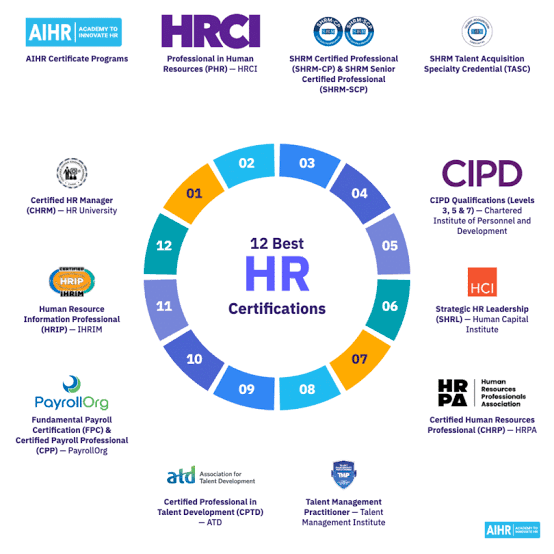
HR certifications can strengthen your professional profile and demonstrate specialized knowledge.
Popular professional HR certifications include:
- SHRM-CP – Society for Human Resource Management Certified Professional.
- SHRM-SCP – Society for Human Resource Management Senior Certified Professional.
- PHR – Professional in Human Resources.
- SPHR – Senior Professional in Human Resources.
- GPHR – Global Professional in Human Resources.
- CIPD qualifications – Chartered Institute of Personnel and Development.
These credentials can help demonstrate professional commitment and knowledge of HR practices.
However, certification does not automatically guarantee a salary increase or promotion.
4. Industry and Company Size
Salary levels can differ significantly across industries.
For example, large multinational organizations, financial institutions, technology companies, and consulting firms may offer different compensation packages from small businesses and nonprofit organizations.
Company size, workforce complexity, and the strategic importance of the HR function can also influence compensation.
5. Geographic Location
Location is one of the biggest factors affecting HRM salary.
HR professionals working in major business centers may earn different salaries from those working in smaller cities or regions.
International HR professionals should also consider differences in taxation, living costs, employment regulations, and benefits.
6. Technical and Analytical Skills
Modern HR professionals increasingly work with technology and workforce data.
Valuable skills include:
- HR Information Systems (HRIS).
- Human Resource Analytics.
- Advanced Excel.
- Workday.
- SAP SuccessFactors.
- Oracle HCM.
- Applicant Tracking Systems (ATS).
- Data-driven workforce planning.
Professionals who combine HR knowledge with technology and analytical capabilities can strengthen their competitiveness in the employment market.
HRM Salary by Country
HRM salaries vary considerably across international labor markets.
Professionals considering international HR careers should compare compensation using reliable, country-specific salary information.
Some countries and regions with established HR professional markets include:
- United States.
- United Kingdom.
- Canada.
- Australia.
- Germany.
- United Arab Emirates.
- Singapore.
- Switzerland.
- Netherlands.
- Ireland.
When comparing international HR salaries, consider the following:
- Annual gross salary.
- Income tax and social contributions.
- Cost of living.
- Health insurance and retirement benefits.
- Annual leave and other employee benefits.
- Local demand for HR professionals.
- Industry and employer size.
A higher gross salary does not always mean a higher standard of living. Comparing total compensation and living expenses provides a more accurate picture.
How to Increase Your HRM Salary
If you want to improve your earning potential in Human Resource Management, consider developing the following skills and qualifications.
1. Pursue Professional HR Certifications
Professional certifications can help validate your HR knowledge and demonstrate your commitment to continuous development.
Consider certifications such as SHRM-CP, SHRM-SCP, PHR, SPHR, or GPHR based on your career level and professional interests.
2. Develop Strategic HR Skills
Move beyond administrative responsibilities by learning how HR contributes to business performance.
Develop expertise in workforce planning, organizational development, talent management, and strategic HR decision-making.
3. Strengthen HR Technology Skills
Become familiar with modern HR software and systems.
Knowledge of HRIS platforms, payroll systems, applicant tracking systems, and workforce analytics can help improve your professional capabilities.
4. Build Leadership Experience
Take opportunities to lead HR projects, manage teams, coordinate organizational initiatives, and advise business managers.
Leadership experience can help prepare you for HR management and director-level positions.
5. Specialize in High-Value HR Functions
Consider developing expertise in areas such as:
- HR analytics.
- Executive recruitment.
- Compensation and benefits.
- Global mobility.
- Organizational development.
- Talent management.
- Strategic HR business partnering.
Specialized expertise can differentiate you in the employment market.
6. Improve Business and Financial Knowledge
HR professionals who understand organizational strategy, budgeting, financial performance, and business operations can contribute more effectively to senior-level decisions.
Developing business acumen is particularly valuable for HR business partners and HR leaders.
Is Human Resource Management a Good Career?
Human Resource Management can be a rewarding career for individuals interested in people, business operations, organizational development, and workplace improvement.
It offers opportunities to work across different industries and develop expertise in multiple professional areas.
Some important advantages include:
- Opportunities across nearly every industry.
- Multiple career specialization options.
- Potential progression into senior leadership.
- Opportunities to work with international organizations.
- Professional development through certifications.
- The ability to influence employee experience and organizational success.
However, HR professionals also face challenges such as complex employee relations issues, changing employment regulations, organizational restructuring, and increasing expectations from business leaders.
Success in HR requires communication, problem-solving, analytical thinking, ethical judgment, and continuous learning.
Future Trends Affecting HRM Salaries
The HR profession continues to evolve as organizations adopt new technologies and workforce management practices.
Several emerging trends may influence future HR career opportunities and compensation.
1. Artificial Intelligence in HR
AI is transforming recruitment, workforce analytics, employee services, and HR administration.
Professionals who understand how to use AI responsibly in HR processes may gain a competitive advantage.
2. People Analytics
Organizations increasingly rely on workforce data to make decisions about employee retention, recruitment, productivity, and workforce planning.
HR professionals with analytical capabilities can support more informed organizational decisions.
3. Strategic HR Business Partnering
Companies increasingly expect HR professionals to contribute to business strategy rather than focus exclusively on administrative activities.
This creates opportunities for professionals with strong business acumen and strategic HR expertise.
4. Global Workforce Management
Remote work, international recruitment, and multinational operations are increasing the complexity of workforce management.
HR professionals with international HR knowledge and cross-cultural management skills may find additional career opportunities.
5. Employee Experience and Workplace Well-Being
Organizations are placing greater emphasis on employee engagement, workplace culture, retention, and employee experience.
HR professionals who can develop effective people strategies will remain important to organizational success.
Final Thoughts
Human Resource Management offers a diverse range of career opportunities, from entry-level HR administration to senior executive leadership.
HRM salaries depend on several factors, including experience, qualifications, certifications, industry, location, and professional specialization.
For aspiring HR professionals, building a strong foundation in HR principles and gaining practical experience are important first steps.
For experienced professionals, developing strategic capabilities, earning relevant certifications, and gaining leadership experience can help unlock new career opportunities.
Invest in your HR knowledge, develop in-demand skills, and take the next step toward building a successful and rewarding Human Resource Management career.
Frequently Asked Questions (FAQs)
1. What is the average salary of an HR professional?
There is no universal average HR salary. Compensation depends on the country, job title, experience, industry, and organization. HR assistants generally earn less than HR managers and directors.
2. What is the highest-paying job in Human Resource Management?
Senior executive positions such as Chief Human Resources Officer (CHRO), Chief People Officer, and Vice President of Human Resources generally offer some of the highest compensation opportunities in HR.
3. Can I earn a high salary in HR without an HR degree?
Yes. Some employers accept relevant professional experience, business qualifications, and HR certifications instead of a specific HR degree. Requirements vary by employer and position.
4. Which HR certification is best for salary growth?
There is no single certification that guarantees the highest salary. SHRM-CP, SHRM-SCP, PHR, SPHR, and GPHR can support professional development depending on your experience and career goals.
5. How many years does it take to become an HR Manager?
The timeline varies by organization and individual career progression. Many HR managers have several years of relevant HR experience, along with demonstrated leadership and workforce management capabilities.
6. Is HR a high-paying career?
HR offers a broad salary range. Entry-level positions may have moderate compensation, while senior HR management and executive leadership positions can offer significantly higher salaries.
7. Which HR specialization has good career potential?
Talent acquisition, HR business partnering, compensation and benefits, HR analytics, global mobility, and organizational development offer diverse career opportunities.
8. Does an MBA increase HR salary?
An MBA can support career advancement, particularly in strategic HR management and leadership. However, its effect on salary depends on experience, employer requirements, and the broader job market.
9. Are HR professionals in demand?
Organizations across industries need HR professionals to manage recruitment, employee relations, compliance, workforce development, and organizational change. Demand varies by country and industry.
10. What skills are important for a successful HR career?
Important skills include communication, leadership, problem-solving, analytical thinking, employment law knowledge, HR technology, negotiation, and strategic workforce planning.
Career Development Resource: Explore professional HR certifications and training opportunities through SHRM, HRCI, and CIPD.
HR salary, Human Resource Management salary, HR manager salary, HR career, HR jobs salary