
Pass Project Management Exams on first attempt with the help of our proxy services or our guaranteed exam questions and answers, We can pass the exam on your behalf, if you are not sure of passing the exam on your own, when working with us, there's no chance for failure. Contact Us Today, PMP Certification in Saudi Arabia .
PMP Certification in Saudi Arabia : Complete Guide to Requirements, Exam, Cost, Salary & Career Opportunities in 2026
Last Updated: November 2026
Project management has become an essential business function across industries. Organizations rely on skilled project managers to plan initiatives, manage resources, control budgets, coordinate teams, reduce risks, and deliver successful business outcomes.
One of the most recognized professional qualifications in this field is the Project Management Professional (PMP) certification, awarded by the Project Management Institute (PMI).
The PMP certification demonstrates that an individual has the knowledge, experience, and leadership capabilities required to manage projects in different industries and professional environments.
Whether you are an experienced project manager, engineer, IT professional, business analyst, construction professional, or aspiring project leader, earning the PMP credential can help strengthen your professional profile.
In this comprehensive guide, we explore everything you need to know about Project Management Professional certification, including eligibility requirements, examination structure, certification costs, salaries, career opportunities, and preparation strategies.
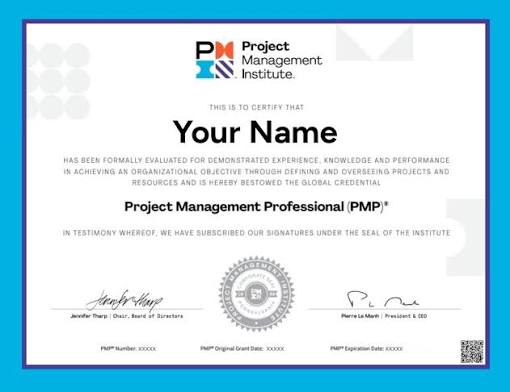
1. What Is Project Management Professional (PMP) Certification?
The Project Management Professional (PMP) certification is an internationally recognized professional credential issued by the Project Management Institute (PMI).
It validates an individual's ability to lead and manage projects using different project management approaches, including:
- Predictive project management.
- Agile project management.
- Hybrid project management.
The certification focuses on three major dimensions of professional project management:
- People – Leading teams, managing stakeholders, resolving conflicts, and developing collaboration.
- Process – Planning, executing, monitoring, and delivering projects.
- Business Environment – Aligning projects with organizational objectives, governance, compliance, and business value.
Unlike qualifications focused on a single industry or project management methodology, PMP certification demonstrates transferable project leadership capabilities.
Professionals with PMP certification work in industries such as:
- Information technology.
- Construction and engineering.
- Banking and financial services.
- Healthcare.
- Manufacturing.
- Telecommunications.
- Government.
- Consulting.
- Energy and infrastructure.
2. What Does a Project Management Professional Do?
A Project Management Professional is responsible for leading projects from initiation through completion.
Their responsibilities vary depending on the organization, industry, project complexity, and management structure.
A. Project Planning
Project managers develop structured plans that establish project objectives, timelines, deliverables, and resource requirements.
Typical responsibilities include:
- Defining project objectives.
- Establishing project scope.
- Developing project schedules.
- Estimating project costs.
- Allocating resources.
- Identifying project dependencies.
- Establishing performance measurements.
B. Project Execution
During project execution, project managers coordinate activities and ensure that project teams complete their assigned responsibilities.
Activities include:
- Assigning responsibilities.
- Coordinating team members.
- Managing suppliers.
- Communicating with stakeholders.
- Monitoring deliverables.
- Resolving operational challenges.
C. Project Monitoring and Control
Project managers continuously monitor project performance to determine whether activities are progressing according to approved plans.
They monitor:
- Project costs.
- Work schedules.
- Project scope.
- Quality standards.
- Resource utilization.
- Risk exposure.
- Stakeholder expectations.
D. Risk Management, PMP Certification in Saudi Arabia .
Every project involves uncertainty.
Project managers identify potential risks, evaluate their impact, and develop appropriate responses.
Examples include:
- Budget overruns.
- Delayed supplier deliveries.
- Technical failures.
- Resource shortages.
- Regulatory changes.
- Security incidents.
E. Stakeholder Management
Project managers work with stakeholders to maintain communication and alignment throughout the project.
Stakeholders may include:
- Project sponsors.
- Customers.
- Employees.
- Contractors.
- Suppliers.
- Senior management.
- Regulatory authorities.
F. Project Closure
At the end of a project, project managers confirm that deliverables have been completed and accepted.
They also:
- Obtain stakeholder approval.
- Close procurement activities.
- Release project resources.
- Document lessons learned.
- Complete final reporting.
- Transfer deliverables to operational teams.
3. Project Management Professional Certification Requirements
To become PMP certified, candidates must satisfy PMI's education, professional experience, and project management training requirements.
The eligibility requirements were updated in July 2026.
There are four main eligibility pathways.
Pathway 1: Secondary School Education
Candidates with a high school diploma or equivalent qualification must have:
- Five years of professional project management experience.
- At least 35 hours of project management training. PMP Certification in Saudi Arabia .
Pathway 2: Associate-Level or Vocational Qualification
Candidates with a recognized associate-level qualification or eligible post-secondary vocational qualification must have:
- Four years of professional project management experience.
- At least 35 hours of project management training.
Pathway 3: Bachelor's Degree or Equivalent
Candidates with a recognized bachelor's degree or eligible equivalent qualification must have:
- Three years of professional project management experience.
- At least 35 hours of project management training.
Pathway 4: PMI GAC-Accredited Degree
Candidates with a bachelor's or postgraduate degree from a PMI Global Accreditation Center (GAC)-accredited program must have:
- Two years of professional project management experience.
- Applicable project management training requirements.
Summary of PMP Eligibility Requirements
| Educational qualification | Required experience | Training |
|---|---|---|
| Secondary school | 60 months | 35 hours |
| Associate-level or eligible vocational qualification | 48 months | 35 hours |
| Bachelor's degree or equivalent | 36 months | 35 hours |
| PMI GAC-accredited degree | 24 months | 35 hours |
All qualifying project experience must have been acquired within the previous 10 years.
Experience must involve leading and directing projects in a professional setting. Overlapping project periods cannot be counted twice.
An active CAPM certification can fulfill the 35-hour training requirement, subject to PMI's eligibility rules.
Important: PMI's July 2026 eligibility framework should be used when preparing a new application. Check the official examination content outline for qualification mapping and documentation requirements.
4. What Is the PMP Examination Structure in 2026?
The PMP examination evaluates a candidate's ability to apply project management knowledge in practical business situations.
The July 2026 examination framework contains three major domains.
Domain 1: People
PMP Certification in Saudi Arabia .
The People domain evaluates leadership, team management, stakeholder relationships, and communication.
Key topics include:
- Developing a common vision.
- Managing conflicts.
- Leading project teams.
- Engaging stakeholders.
- Aligning stakeholder expectations.
- Managing stakeholder expectations.
- Knowledge transfer.
- Project communication.
Domain 2: Process, PMP Certification in Saudi Arabia .
The Process domain focuses on planning, coordinating, managing, and delivering projects.
Key topics include:
- Integrated project management planning.
- Project scope management.
- Value-based delivery.
- Resource management.
- Procurement management.
- Financial management.
- Quality management.
- Schedule management.
- Project status evaluation.
- Project closure.
Domain 3: Business Environment, PMP Certification in Saudi Arabia .
The Business Environment domain evaluates how projects align with organizational strategy and business objectives.
Key topics include:
- Project governance.
- Compliance management.
- Change management.
- Removing project impediments.
- Risk management.
- Continuous improvement.
- Organizational change.
- External business environment analysis.
PMP Examination Overview
| Examination feature | Details |
|---|---|
| Total questions | 180 |
| Scored questions | 170 |
| Unscored pretest questions | 10 |
| Examination duration | 240 minutes |
| Total domains | 3 |
| Scheduled breaks | Two 10-minute breaks |
| Delivery | Test center or online proctored |
The examination includes different question formats, such as:
- Single-answer multiple-choice questions.
- Multiple-response questions.
- Scenario-based questions.
- Case studies.
- Matching questions.
- Graphic-based questions.
- Drag-and-drop activities.
- Point-and-click questions.
- Pull-down selection questions.
The updated examination emphasizes practical decision-making rather than simply memorizing project management definitions.
5. Predictive vs Agile vs Hybrid Project Management
An important feature of PMP certification is its coverage of different project management approaches.
Predictive Project Management, PMP Certification in Saudi Arabia .
Predictive project management is commonly associated with traditional, sequential project delivery.
It works particularly well when requirements are relatively stable and project activities can be planned in advance.
Characteristics include:
- Detailed upfront planning.
- Defined project scope.
- Sequential activities.
- Formal change control.
- Established milestones.
- Baseline schedules and budgets.
Examples include certain construction, infrastructure, and engineering projects.
Agile Project Management
Agile project management focuses on iterative development, collaboration, and responding to changing requirements.
Characteristics include:
- Short development cycles.
- Frequent feedback.
- Incremental delivery.
- Continuous improvement.
- Adaptive planning.
- Close stakeholder collaboration.
Agile is commonly used in software development and product development.
Hybrid Project Management, PMP Certification in Saudi Arabia .
Hybrid project management combines predictive and agile practices.
For example, a technology implementation may use a predictive approach for overall budgeting and governance while using agile sprints for software development.
Understanding when to use each approach is important for PMP examination preparation.
6. How Much Does PMP Certification Cost in 2026?
The total investment in PMP certification depends on examination fees, training expenses, study materials, PMI membership, and possible retake costs.
PMI's published examination prices include:
| Expense | Cost |
|---|---|
| PMP exam fee – PMI members | $405 |
| PMP exam fee – Non-members | $655 |
| Project management training | Varies |
| Study materials | Varies |
| Practice examination resources | Varies |
| PMI membership | Additional |
The PMP examination fee is payable after the application has been accepted and the candidate is ready to schedule the examination.
Candidates should also consider potential taxes, currency conversion, and regional pricing.
Is PMI membership worth it?, PMP Certification in Saudi Arabia .
Compare the annual membership fee and the applicable examination discount before purchasing membership. The best option depends on whether you will use other PMI membership benefits.
7. How to Prepare for the PMP Examination
Passing the PMP examination requires structured preparation and a strong understanding of practical project management situations.
Here is a suggested eight-week study plan.
Week 1: Understand the PMP Examination
- Review the July 2026 Examination Content Outline.
- Understand the three examination domains.
- Identify your strengths and weaknesses.
- Establish a realistic study schedule.
Week 2: People Domain, PMP Certification in Saudi Arabia .
Focus on:
- Leadership styles.
- Team development.
- Stakeholder engagement.
- Conflict resolution.
- Communication management.
- Emotional intelligence.
Week 3: Project Planning
Study:
- Scope management.
- Schedule development.
- Resource management.
- Cost estimation.
- Project integration.
- Project planning techniques.
Week 4: Agile and Hybrid Project Management
Study:
- Agile principles.
- Scrum concepts.
- Iterative delivery.
- Product backlogs.
- Sprint planning.
- Hybrid project approaches.
Week 5: Project Monitoring and Control, PMP Certification in Saudi Arabia .
Study:
- Project performance.
- Earned value management.
- Quality management.
- Change control.
- Risk monitoring.
- Project reporting.
Week 6: Business Environment
Study:
- Project governance.
- Organizational strategy.
- Compliance.
- Business value.
- Sustainability.
- Organizational change.
Week 7: Practice Questions
- Complete scenario-based questions.
- Review case studies.
- Practice different question formats.
- Analyze incorrect answers.
Week 8: Final Revision, PMP Certification in Saudi Arabia .
- Review weak topics.
- Complete a timed mock examination.
- Revise important formulas and concepts.
- Practice time management.
Use the official PMI examination outline as your primary study guide.
8. Important PMP Examination Formulas
Although the PMP examination emphasizes practical decision-making, candidates should understand important project management calculations.
Earned Value Management
Earned Value Management (EVM) is used to measure project performance by comparing planned work, completed work, and actual expenditure.
Important terms:
- Planned Value (PV): Budgeted value of scheduled work.
- Earned Value (EV): Budgeted value of completed work.
- Actual Cost (AC): Actual expenditure for completed work.
Cost Variance
CV = EV − AC
A positive result indicates the project is under budget relative to the work completed.
Schedule Variance
SV = EV − PV
A positive result indicates more work has been completed than planned.
Cost Performance Index
CPI = EV / AC
A value greater than 1 indicates favorable cost performance.
Schedule Performance Index
SPI = EV / PV
A value greater than 1 indicates favorable schedule performance.
Example
A project has:
- Planned Value = $100,000.
- Earned Value = $80,000.
- Actual Cost = $90,000.
Cost Variance:
CV = $80,000 − $90,000 = -$10,000.
Schedule Variance:
SV = $80,000 − $100,000 = -$20,000.
Cost Performance Index:
CPI = $80,000 / $90,000 = 0.89.
Schedule Performance Index:
SPI = $80,000 / $100,000 = 0.80.
The project is over budget relative to the completed work and is behind schedule.
9. Project Management Professional Salary and Career Opportunities
PMP certification can support career development across multiple industries.
Potential job positions include:
| Job title | Main responsibilities |
|---|---|
| Project Manager | Planning and delivering projects |
| Senior Project Manager | Managing complex projects |
| Program Manager | Coordinating related projects |
| Project Coordinator | Supporting project delivery |
| Project Management Consultant | Advising organizations |
| PMO Manager | Managing project governance |
| IT Project Manager | Leading technology initiatives |
| Construction Project Manager | Managing construction projects |
| Operations Project Manager | Improving operational delivery |
What Influences PMP Salary? PMP Certification in Saudi Arabia .
Several factors influence the salary of a PMP-certified professional.
Experience: Senior professionals with substantial project leadership experience may qualify for higher-level positions.
Industry: IT, engineering, construction, energy, banking, and consulting have different compensation structures.
Geographical location: Salary levels vary significantly across countries and regions.
Project complexity: Managing large budgets, international teams, and complex programs may influence compensation.
Additional qualifications: Specialized credentials in agile delivery, risk management, business analysis, or program management may strengthen professional opportunities.
According to PMI's published certification information, PMP holders report higher median salaries than non-certified project professionals. However, certification alone does not guarantee a particular salary or promotion.
10. Benefits of PMP Certification
Earning PMP certification offers several professional benefits.
A. International Professional Recognition, PMP Certification in Saudi Arabia .
The PMP credential is recognized across different countries and industries.
B. Improved Project Management Knowledge
Candidates develop a stronger understanding of project leadership, planning, risk management, governance, and business value.
C. Career Development
The certification can strengthen applications for project management and leadership positions.
D. Professional Credibility
PMP demonstrates that an individual has met established education, experience, and examination requirements.
E. Professional Networking
PMI membership and chapter activities provide opportunities to connect with project management professionals.
F. Better Understanding of Different Methodologies
PMP preparation develops knowledge of predictive, agile, and hybrid project delivery.
11. PMP vs CAPM: What Is the Difference?
The Project Management Professional (PMP) and Certified Associate in Project Management (CAPM) are both offered by PMI.
However, they are designed for different professional experience levels.
| Feature | PMP | CAPM |
|---|---|---|
| Full name | Project Management Professional | Certified Associate in Project Management |
| Target audience | Experienced project leaders | Aspiring and early-career professionals |
| Professional experience | Required | Not required |
| Education | Multiple eligibility pathways | Secondary education or equivalent |
| Training | 35 hours, subject to eligibility rules | 23 hours of project management education |
| Main focus | Applied project leadership | Foundational project management knowledge |
PMP is generally more appropriate for professionals who already have experience leading projects.
CAPM is a useful starting point for individuals who are developing their project management careers.
12. How to Maintain Your PMP Certification
Earning PMP certification is not the end of your professional development.
PMI requires certified professionals to maintain their credentials through the Continuing Certification Requirements (CCR) program.
PMP certification holders must earn:
60 Professional Development Units (PDUs) every three years.
PDUs can be earned through eligible activities such as:
- Professional education.
- Training courses.
- Project management conferences.
- Reading and learning.
- Teaching.
- Volunteering.
- Creating professional content.
PMP holders must also complete the applicable renewal process and pay the required renewal fee.
Continuing professional development helps project managers stay updated with emerging methodologies, technology, governance requirements, and industry practices.
13. Frequently Asked Questions About Project Management Professional Certification
What does PMP stand for?
PMP stands for Project Management Professional.
Who issues PMP certification?
The Project Management Institute (PMI) awards the PMP credential.
Is PMP certification internationally recognized?
Yes. PMP is a globally recognized project management qualification used by professionals across many industries and countries.
How many years of experience are required for PMP?
Under the July 2026 eligibility framework, candidates need between two and five years of qualifying project leadership experience, depending on their educational background.
Do I need a bachelor's degree to become PMP certified?
No. Candidates can qualify through alternative education pathways, including secondary education and eligible vocational qualifications, provided they meet the corresponding experience and training requirements.
How many questions are in the PMP examination?
The updated examination contains 180 questions, including 170 scored questions and 10 unscored pretest questions.
How long is the PMP examination?
The examination lasts four hours.
What is the PMP examination passing score?
PMI does not publish a single universal numerical passing percentage. Examination results are determined using PMI's scoring methodology.
How much does PMP certification cost?
The published examination fee is $405 for PMI members and $655 for non-members. Training and study expenses are additional.
Is PMP certification difficult?
The examination requires a strong understanding of project management concepts and the ability to apply them to complex workplace scenarios. Preparation and practical experience are important.
How long does it take to prepare for PMP?
Preparation time varies. An eight- to twelve-week study plan is a reasonable starting point for many candidates, depending on their background and available study time.
Can I take the PMP examination online?
Yes. PMI provides online proctored examination options as well as in-person testing.
How do I renew PMP certification?
PMP holders must earn 60 PDUs during each three-year renewal cycle and complete the applicable renewal requirements.
14. Conclusion: Is Project Management Professional Certification Worth It?
The Project Management Professional certification is a valuable professional qualification for individuals who want to develop their project leadership capabilities and advance their careers.
It provides a structured way to demonstrate knowledge of project planning, stakeholder management, team leadership, risk management, governance, and business value delivery.
With the July 2026 examination update, the PMP credential places additional emphasis on practical project management, scenario-based decision-making, and modern approaches to delivering business value.
Whether you work in IT, construction, engineering, banking, healthcare, or consulting, PMP certification can strengthen your professional knowledge and support long-term career development.
If you are considering becoming PMP certified, start by checking your eligibility, reviewing the latest examination content outline, and preparing a structured study plan.
Take the next step toward becoming a Project Management Professional.
Visit the official Project Management Institute website:
SEO Settings
SEO Title: Project Management Professional (PMP) Certification: Complete Guide 2026
Meta Description: Discover everything about Project Management Professional certification in 2026. Explore PMP requirements, exam format, costs, salary, benefits, and career opportunities.
Primary Keyword: Project Management Professional
Secondary Keywords:
- PMP Certification
- Project Management Professional Certification
- PMP Exam Requirements
- PMP Certification Cost
- PMP Exam Preparation
- PMP Salary
- Project Management Certification
- PMI Certification
- PMP Career Opportunities
- PMP Exam 2026
Suggested URL Slug: /project-management-professional/
Search Intent: Informational
Suggested Blog Category: Professional Certifications
Suggested Tags: PMP Certification, Project Management Professional, PMI, Project Management, PMP Exam, Agile Project Management, Project Leadership, Professional Development